
It's never enough
On students and shame
A few weeks back, the New York Times ran an opinion piece called “Why Aren’t the Kids Out Protesting About Trump?” It was written by Thomas Edsell. Edsell does not interview any of the college students he assumes are indifferent to Trump. Instead, he talks to a series of academics about how AI and social media use is causing college students to become passive and apathetic.
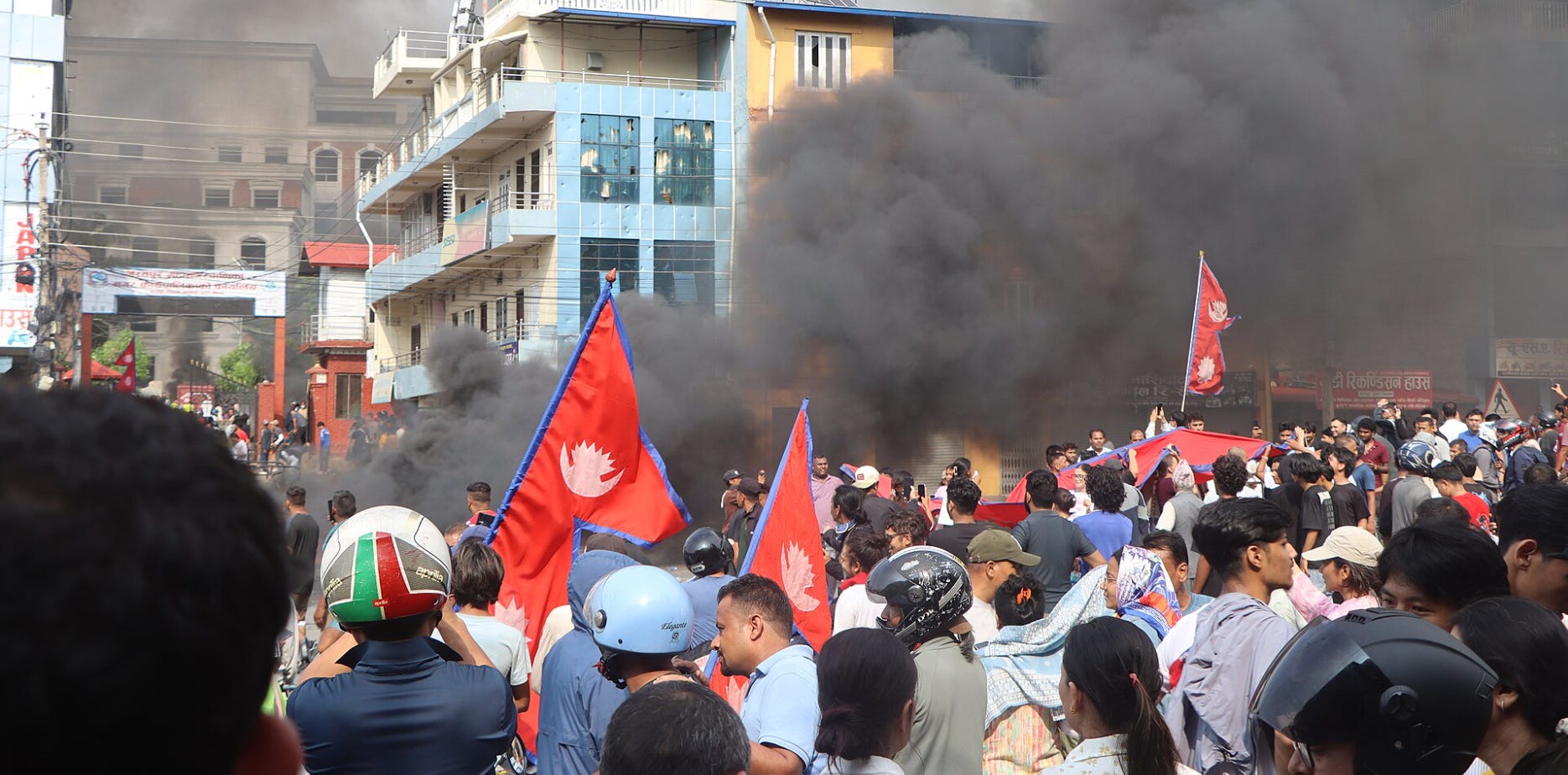
Nepal, September 2025. Via Wikimedia.
In 2018, after the mass shooting at Marjorie Stoneman Douglass high school, hundreds of thousands of young adults and teenagers poured into Washington, D.C. to advocate for stricter gun control laws. They were righteously ignited by fury, and their cause was picked up by celebrities and news outlets who proclaimed that a generation of activists had finally been awakened. America, everyone was sure, was about to change, and these young people would be the ones to save it.
Nothing happened. Legislation ground to a halt. The NRA’s chokehold on politics became clear. Gun owners claimed that self defense trumped the lives of their own children. And when the young activists saw that all of their passion and work, all of the miles they walked marching protesting and marching led to nothing, they went on with their lives. Some of them moved behind the scenes, doing the same work, but less publicly. Some gave up on activism altogether.
For this, shame was thrown at them, again and again, by adults who had never experienced an active shooter drill, had never had to barricade the door of a classroom or huddle under a desk when the shooter turned out to be real. They were shamed because the failure was now theirs. Nothing had changed. Must be those apathetic kids staring into their phones, scrolling through the disasters that surround them.
When pro-Palestinian activists showed up on college campuses in 2024, they were gassed, pelted with rubber bullets, cudgeled and surveilled by the government. When Jewish students expressed solidarity with Palestinians or spoke up about their skepticism about the war, they were gassed, pelted with rubber bullets, cudgeled and surveilled by the government. When Black Lives Matter activists made their voices heard on college campuses, they were gassed, pelted with rubber bullets, cudgeled and surveilled by the government. When students spoke up about ICE on campuses, they were gassed, pelted with rubber bullets, cudgeled and surveilled by the government.
Then they were called apathetic failures.
Why aren’t the kids protesting? Why won’t the kids save the world?
This week, a student at UC Berkeley died. We don’t know what happened yet except that they fell from a high floor in a dormitory in the middle of the day, and that several other students saw it happen. Try and imagine that, just a few weeks before finals. Try and imagine what the students who saw it happen will see in their dreams tonight.
In February, a UC Berkeley student’s body was pulled out of a lake in Tilden Park. He was a graduate student, and he was missing for days. Try and imagine the dreams of his family and friends after his body was found.
Thomas Edsell wants to know why the kids aren’t protesting Trump. The median age at the No Kings protests is 48. What, the college students will sometimes ask, are those protests about? Trump isn’t a king? America isn’t a monarchy? Surveys reveal they disapprove of the president. Why don’t they just show up? Why don’t they find the time in a schedule packed with classes, jobs, trying to carve out some kind of social life, watching the job market collapse in front of them, watching their parents being laid off and deported, why don’t they take hours out of a day and drive to Michael’s and buy posterboard and markers and then take a train or bus to a protest where they’ll be asked, again and again, why there aren’t there more of you here?
They do show up. They show up in places and in ways that don’t look like what previous generations call activism. They volunteer. They do mutual aid. They sit on phone lines texting and talking to other students who are suicidal, they talk to other students who are trans and afraid, they talk to other students who are undocumented and don’t want to attend a protest for fear of being sent to an ICE mega-facility. They gather resources and share them. They build networks. They write without using AI. They use social media to spread news faster than traditional media can. They watch videos of other students in Palestine, in Iran, in Ukraine.
In Nepal, Gen Z activists overthrew the government. The new president is a 35-year-old rapper. It didn’t even make an above the fold headline.
Two Berkeley students are dead in one semester. The university offers resources*, reminds those of us who teach them to reach out and check in when a student seems to be struggling. But they are all struggling. And some of that struggle is rooted in a sense of shame.
They are not protesting in the same old ways because they tried it and saw what happened to their friends, they tried it and saw that for all of their marching and protesting the people who celebrated them and said they would save the world abandoned them. The guns are still everywhere. The wars still rage on. The ICE agents still snatch people. They are not thinking and acting in the ways other generations thought and acted. They are mobilizing and planning and absolutely fucking sick of people saying “the world is on fire” because they were baptized in fire, and they bathe in fire, eat fire, and move through fire every day.
And people point fingers and say why don’t you care. And sometimes, they die.
*If you are thinking of harming yourself, call 988 any time.
For Shaketh and William